
Most enterprise phone fleets don't fail in a dramatic way. They fail quietly: a cracked screen here, a battery that stops holding charge there, a device that falls out of its security update window while still being the only thing connecting a technician to the dispatch system. Multiply that by a few hundred handsets and the cheapest phone on the purchase order becomes the most expensive line in the IT budget.
That gap between sticker price and cost of ownership is the entire business case for Crosscall, a French manufacturer that has been building Android devices for field workers since 2009. The company doesn't try to win benchmarks against flagship smartphones. It sells something less glamorous and, for a particular kind of buyer, more useful: a device that is still working, still supported and still repairable five years after it was bought.
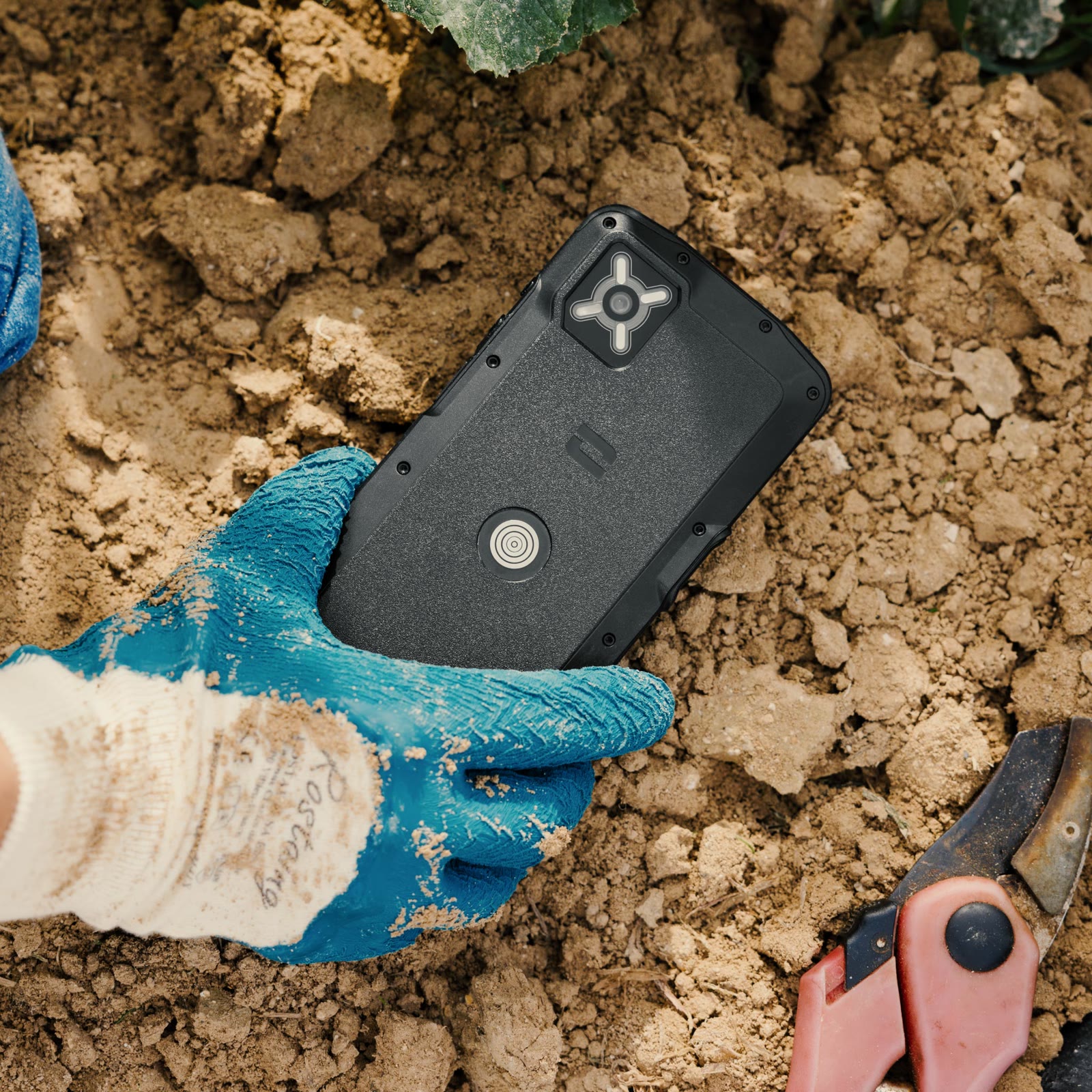
A phone company that behaves like an equipment supplier
Crosscall was founded in Aix-en-Provence in 2009 by Cyril Vidal, and it has stayed deliberately narrow. The company designs and engineers in France, keeps its after-sales and repair operations there too, and has built its reputation on devices that meet military and industrial standards rather than on camera megapixels. It now employs more than 150 people, has sold over four million devices, and reports revenue above €200 million — modest numbers by smartphone-industry standards, but substantial for a company that mostly sells to fleets, public services and industrial buyers.
The timeline explains the focus. In 2011 Crosscall shipped its first floating phone, a device built for people who work near water. By 2018 it had put the TREKKER-X4 into the hands of some 27,000 SNCF rail crew, and in 2020 it launched the CORE line, which ended up deployed to around 283,000 police officers in France. The STELLAR range arrived in 2023 alongside X-SPACE, the company's desktop-mode software, and a rollout to roughly 29,000 Leroy Merlin employees. Since then Crosscall has signed with BT and Telefónica, moved part of production to made-to-order manufacturing, and expanded into the United States with AT&T and into the Middle East.
None of that is the story you'd tell if you were selling consumer phones. It is, however, the story an IT manager evaluating a five-year hardware refresh wants to hear.
Why durability is a software problem
It's tempting to file rugged phones under hardware curiosities — a niche for construction sites and rescue teams. In practice, the reasons these devices last longer are as much about software and service commitments as about rubber corners.
Start with the update window. A phone that stops receiving security patches after three years is a phone that has to be replaced on a fixed schedule whether or not the hardware still works. Crosscall's current devices ship on recent Android versions and commit to a longer upgrade path: the CORE-M6 arrives on Android 15 with upgrades planned through Android 16, 17, 18 and 20, while the STELLAR-M6 ships on Android 14 and follows the same route to Android 20. Both models are Android Enterprise Recommended and support zero-touch enrolment, which means a fleet can be provisioned and locked down without anyone unboxing devices by hand.
Then there's the battery, which is where most consumer fleets quietly degrade. Crosscall warranties its batteries for the full five-year term, replacing a cell if its capacity falls to 70% or below within 850 full charge cycles. Batteries are a wear item; treating them as a warranty issue rather than an out-of-scope consumable changes the maths on a fleet refresh considerably.
And there's repair. Crosscall runs its own after-sales operation in France, with component-level repairs and parts availability that a grey-market import can't match. A screen replacement on a €300 phone is usually uneconomic — which is exactly how a "cheap" fleet becomes an expensive one.
The lineup, and what each model is for
Crosscall's catalogue splits into two families: CORE for industrial and field use, STELLAR for people who want the same toughness in something that looks like a normal phone.
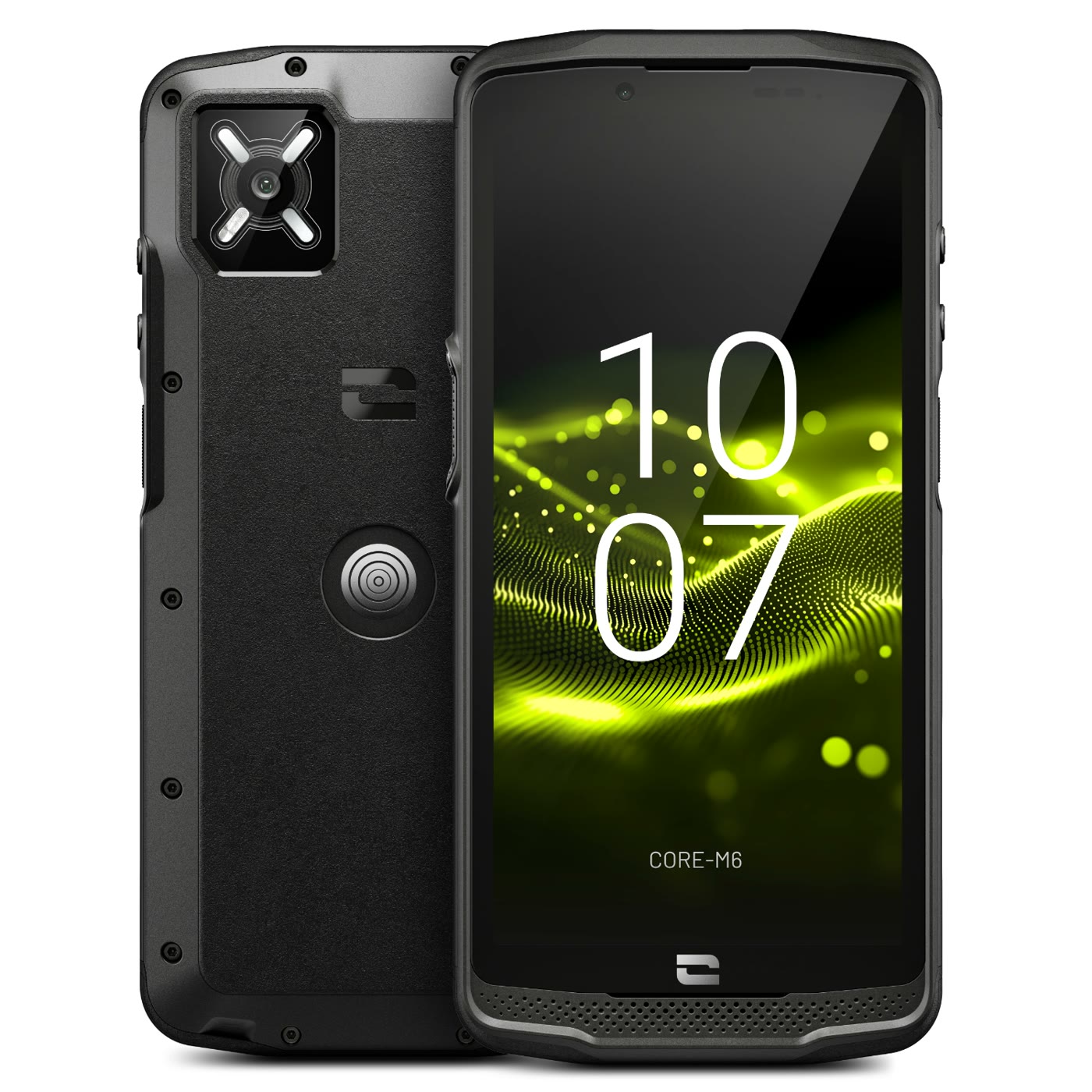
The CORE-M6 at €299.90 (down from a €319.90 list price) is the volume model and the one most fleets will look at first. It's rated IP68 and IP69K — the latter meaning it survives high-pressure, high-temperature water jets, which is a different test from being dropped in a puddle — and it meets MIL-STD 810H, including drops from 1.2 metres onto concrete. Crosscall's X-TREMESHIELD structure surrounds the internals, and the company rates the phone for operation between -20°C and +60°C. Inside there's a Qualcomm Dragonwing QCM4490, 6GB of RAM, 128GB of storage, a 4,950 mAh battery rated for 34 hours of talk time and up to 24 days of standby, and a 48MP rear camera. The 5.99-inch display is 576×1152 — adequate for maps, forms and scanning, but nobody is editing photos on it.
The CORE-Z5 sits above it at €449.90 (from €599.90), adding salt-water and dust resistance plus an outdoor mode that Crosscall says stretches battery life by around 25%. The CORE-Z6 450 at €1,099.90 is a specialist instrument rather than a general-purpose handset: it's built around 450 MHz cellular bands for utilities and critical-infrastructure operators, which is a niche but an important one.
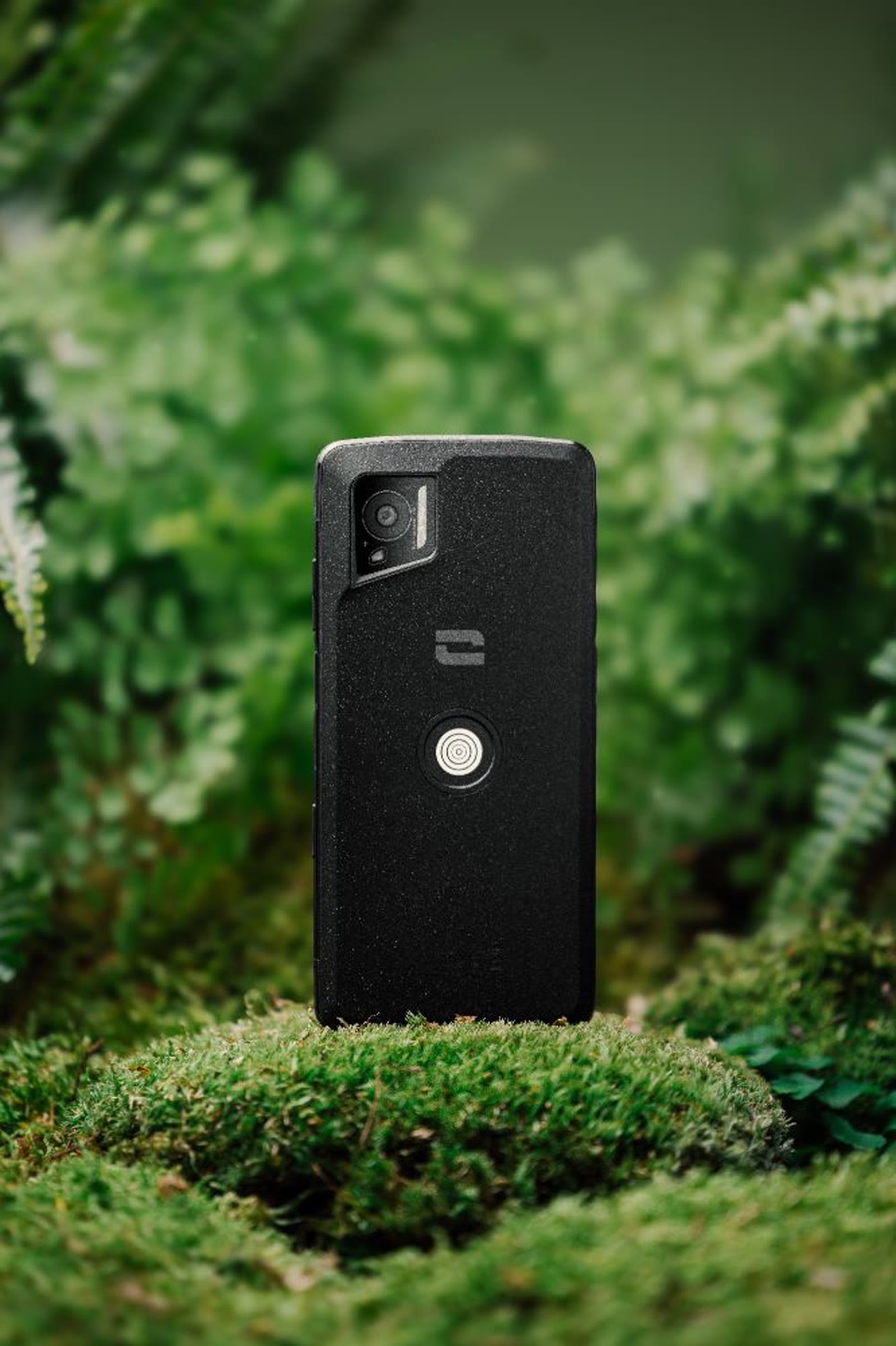
The STELLAR-M6 at €399.90 (list €499.90) is the one to look at if the device has to pass as a normal phone. It's an octa-core handset with 5G, a 6.1-inch display with Gorilla Glass 5, gloves-on and wet-finger touch support, and three programmable buttons that can be mapped to push-to-talk, SOS or a custom workflow. Crosscall rates it for 35 hours of 5G talk time and 400 hours of standby, and lists 80.42% recyclability. The Chamonix editions add a fourth programmable key and a longer 44-hour talk time: the STELLAR-M6 Chamonix is €379.90 against a €499.90 list, and the STELLAR-X5s Chamonix is €599.90 against €699.90.
X-SPACE: the part software people should care about
The most interesting thing Crosscall ships isn't a spec — it's X-SPACE, a desktop environment built into the phone's Android layer. Connect a monitor, keyboard and mouse over USB-C or wirelessly, and the phone presents a desktop UI: windowed apps, keyboard shortcuts, right-click context menus, multi-window layouts and a taskbar that keeps work moving between screens. A single external display works directly; a second one needs a DisplayLink-capable hub.
For a software team, that reframes what the device is. Instead of "a rugged phone with a scanner app", it becomes a thin client that a field engineer can dock at a substation to fill in a maintenance report, then unplug and carry up a ladder. It also means one endpoint — one thing to patch, enrol, secure and eventually replace — instead of a phone plus a laptop plus a tablet. X-SPACE runs natively rather than as a third-party launcher, so it inherits the same device management and update policy as the rest of the system.
It is not a desktop replacement in the workstation sense. Android apps remain Android apps, and a 6-inch-class panel docked to a monitor is a 576×1152 canvas being stretched. But for the specific job of "field worker needs to type a form on a real keyboard without carrying a second computer," it's a genuinely different proposition from what a consumer handset offers.
The 450 MHz angle
The CORE-Z6 450 deserves a paragraph of its own because it explains who Crosscall actually sells to. The 450 MHz band is used for private LTE and 5G networks by grid operators, water utilities and emergency services — spectrum that travels further and penetrates buildings better than commercial cellular bands, which is why it appeals to infrastructure operators covering large, sparsely populated areas.
The CORE-Z6 450 supports those bands (B31 and B72 in LTE) alongside ordinary 5G, runs a Qualcomm Dragonwing QCM6490, and weighs around 330 grams at 21mm thick. It's certified for Germany's 450connect network, the private radio system being built for that country's energy and water sectors. This is a device sold the way industrial equipment is sold: to an operator who needs handsets that work on a specific network, with a support contract behind them, for a decade.
What the spec sheet doesn't say
The honest case against Crosscall is straightforward. You can buy a faster phone for €300 — more RAM, a sharper screen, a better camera — and if your team works in an office, that phone plus a €20 case is the correct answer. The CORE-M6's display resolution in particular would be a dealbreaker for anyone doing visual work, and the Z6 450 is a specialist device that makes no sense outside its network niche.
The prices above are also French retail prices in euros, listed on crosscall.com in November 2026, so they float with promotions and vary by market. Some models show list prices alongside current ones, and the discount is not permanent.
What you're paying for is the parts of the product that don't appear in a spec table: the warranty that covers the battery for five years, the update commitment that reaches Android 20, the in-house repair network, and the field-specific hardware — push-to-talk, a dedicated SOS key, glove and wet touch, a speaker loud enough to be heard over machinery, and a speaker-cleaning mode for when it inevitably fills with dust.
The verdict
Crosscall occupies an odd position: a French hardware company selling Android devices in a market dominated by Chinese manufacturers on price and by Samsung and Apple on ecosystem. Its answer is to compete on lifecycle instead — longer warranties, longer update windows, repairability, and industrial certifications that consumer phones simply don't carry.
For a software or IT team, the pitch is that the endpoint stops being disposable. A fleet of devices that survives five years with a warranty behind it, enrols through zero-touch, and can dock into a desktop when the job calls for one is a different total cost of ownership from a fleet of cheap phones replaced every 24 months. Whether that maths works for your organisation depends on where your people work — but it's a calculation worth running rather than dismissing.